


Blog
Welding cracks

Welding cracks
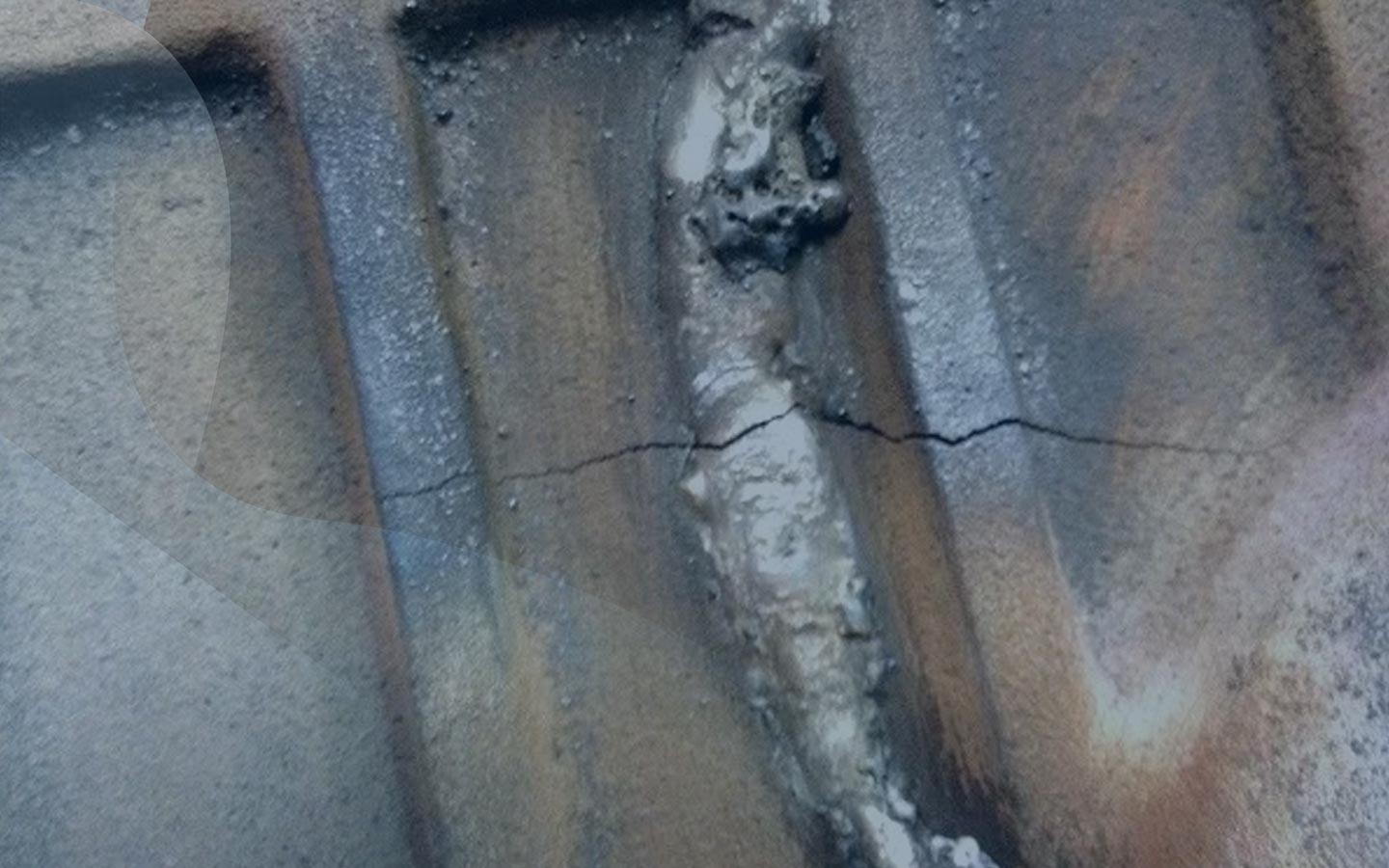
Hot cracks, namely subcolidus cracks, are formed at a temperature lower than the temperature of the completion of metal hardening in the seam area. These defects tend to originate in areas adjacent to the fusion area.
They also appear on the transverse grain boundaries in the very middle of the suture joint. In fact, the place of formation of polygonal or subsolidus cracks is the boundaries of crystallites with an imperfect structure or extraneous inclusions. In such places, pronounced intergranular slippage is observed.
An increase in these very grains leads to an increase in slippage and an increase in the likelihood of cracks. An example of the most frequent places of occurrence of this type of defect are areas of reflow and areas enriched with impurities.
How do they prevent the formation of polygonization cracks?
Since subcolidus cracks belong to the hot category and are “dependent” on the welding temperature and cooling rate, it is logical to assume that proper operation of the cooling rate can eliminate their occurrence.
In particular, increasing the rate of cooling in a place of elevated temperature will reduce the rate of polygonization processes, but will increase the tensile stress. In turn, it can provoke the appearance of microcracks along the polygonal boundaries.
Careful and skilful control of the cooling rate not immediately of the entire welded joint, but only of the tail part of the welding bath, will completely eliminate the occurrence of the described defects. This maneuver is performed by inserting an independent additive wire into the welding bath.
Complete suppression of the formation of polygonizing cracks is possible due to the second phase of high temperature, which should be evenly distributed throughout the seam.
Cracks do not appear when working with:
- Fine-grained austenitic steels and alloys.
- Steels and alloys that do not contain non-metallic components, gases, or fusible inclusions.
- Heat-resistant austenitic steels and alloys, when the safety margin of the base metal is slightly higher than the safety margin of the metal of the welded joint. The seam should be more flexible and malleable than the seam zone.
It all sounds complicated, but you still need to try to meet with polygonization cracks. They are characteristic of rarely used single-phase alloys and metals.
To buy high-quality welding electrodes manufactured by Vatra LLC is always the key to the success of any welding process!
Contacts

Company phone numbers:
+375 (29) 688-27-06
+375 (17) 388-28-02 accountant
+375 (17) 388-28-03 sales department

Email address:


Social network chat:

Social network chat:


