

Electrodes for welding and surfacing of non-ferrous metals and alloys
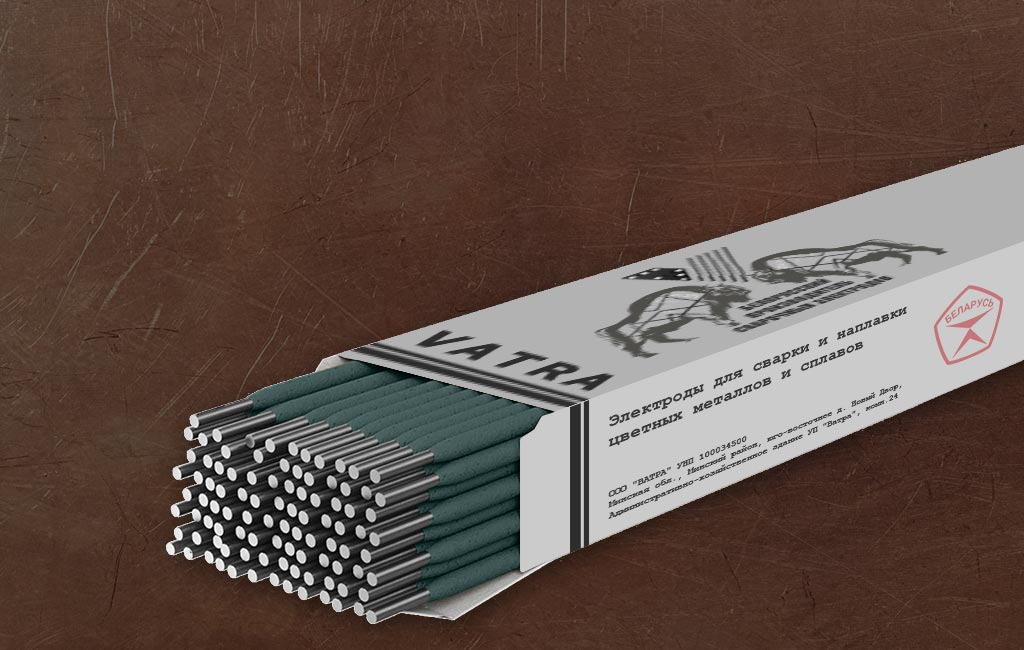
Electrodes for welding and surfacing of non-ferrous metals and alloys
Prices for welding electrodes
VATRA LLC: innovative solutions in the field of electrodes for welding and surfacing of non-ferrous metals and alloys
In the structure of modern industrial production, technologies for joining and restoring parts made of non-ferrous metals occupy a special place. Aerospace, energy, chemical engineering, and shipbuilding impose stringent requirements on the reliability of permanent joints.
However, the quality of the weld or deposited layer is determined not only by the welder’s qualifications but also by the correct choice of consumables. In the context of import substitution and the need for technological independence, the products of domestic manufacturers are becoming particularly significant.
One of the leaders in this niche is VATRA LLC, a company with many years of experience and a reputation as a reliable supplier. The company’s products demonstrate how critical high-quality electrodes for welding and surfacing of non-ferrous metals and alloys are for ensuring the durability and safety of industrial equipment.
1. VATRA LLC: history and position in the welding consumables market. Electrodes for welding and surfacing of non-ferrous metals and alloys.
Over the years, VATRA LLC has established itself as a company focused on high-quality standards.
The company’s specialization covers a wide range of welding consumables, but the most complex and technologically advanced area is the development and production of electrodes for working with non-ferrous metals.
Unlike the mass segment, where material requirements are standardized, the non-ferrous segment requires an individual approach to coating composition, core chemical composition, and technological properties.
The plant’s products undergo strict control at all stages of production — from incoming raw material inspection to testing of finished products in an accredited laboratory.
It is this approach that allows us to state that electrodes for welding and surfacing of non-ferrous metals and alloys under the VATRA LLC brand comply with the strictest standards, including GOST 9466-75, which regulates the general technical specifications for covered metal electrodes for manual arc welding.
2. Key product for copper welding: Komsomolets-100 electrode. Electrodes for welding and surfacing of non-ferrous metals and alloys.
A special place in the company’s portfolio is occupied by a product that has become legendary among professional welders and technologists — the Komsomolets-100 electrode. This product is the result of a deep engineering analysis of the requirements for joining copper and its alloys.
Copper, as is known, is one of the most difficult materials to weld due to its high thermal conductivity (almost 6 times higher than that of low-carbon steel), susceptibility to hot cracking, and high fluidity of the molten metal.
The Komsomolets-100 electrode was specifically developed to overcome these difficulties. It is manufactured in strict accordance with the requirements of GOST 9466-75 and technical specifications TU BY 100034500.068-2017, which confirms the stability of its characteristics and safety of use.
These electrodes for welding and surfacing of non-ferrous metals and alloys are intended for working with copper grades M1, M2, and M3 — the main grades of commercially pure copper used in the production of current-carrying busbars, heat exchangers, pipelines, and electrical components.
2.1 Chemical composition and coating structure
The success of Komsomolets-100 lies in the unique composition of its coating. The electrode core is made of high-purity copper wire, ensuring that the chemical composition of the deposited metal matches the base metal.
The coating contains a complex of alloying and refining components. Since copper has a high tendency to absorb gases in the liquid state, the coating includes active deoxidizers (phosphorus, silicon) that bind oxygen and prevent the formation of cuprous oxide (Cu2O), which is the main cause of porosity and cracks.
Additionally, elements that stabilize the welding arc and promote the formation of a fine-grained weld structure are introduced into the coating composition.
The use of electrodes for welding and surfacing of non-ferrous metals and alloys from the Komsomolets-100 series allows achieving high weld ductility, which is critically important for products operating under cyclic loads and vibrations.
2.2 Purpose: welding of copper and dissimilar joints
The main purpose of the Komsomolets-100 electrode is the welding and surfacing of products made from copper grades M1, M2, M3. These grades differ in impurity content: M1 is the purest (99.9% copper), while M2 and M3 contain small amounts of oxygen and other impurities.
Welding such materials is traditionally considered difficult, but with the use of the correct consumables, it becomes technologically feasible.
However, the key competitive advantage of this product is its ability to weld dissimilar joints, specifically copper to steel. In industry, tasks often arise involving joining copper current-carrying parts to steel structures, copper heat exchangers to steel nozzles, or bimetallic products.
Welding copper to steel is complicated by significant differences in physical properties: melting points, thermal expansion coefficients, and thermal conductivity.
The use of specialized electrodes for welding and surfacing of non-ferrous metals and alloys, such as Komsomolets-100, allows the formation of a transition layer with minimal internal stress levels and prevents the formation of brittle intermetallic phases in the fusion zone.
3. Technological advantages and welding modes. Electrodes for welding and surfacing of non-ferrous metals and alloys.
The effectiveness of using the Komsomolets-100 electrode directly depends on adherence to the recommended technological procedures. VATRA LLC’s products are designed taking into account real-world operating conditions at production sites.
3.1 Spatial position and polarity
According to the technical documentation, welding with this electrode is possible in flat and horizontal-vertical positions. This allows it to be used both for manufacturing new structures in factory conditions (where the flat position is predominantly used) and for repair work at sites where access to the weld is limited and work in the horizontal-vertical position is required.
A critically important parameter is the use of direct current with reverse polarity (electrode positive, workpiece negative). When welding copper, reverse polarity provides several advantages. Firstly, it promotes better penetration of the base metal, compensating for copper’s high thermal conductivity.
Secondly, more heat is generated at the electrode, allowing for effective melting of the core and maintaining arc stability. Thirdly, reverse polarity helps clean the surface of the weld pool from oxide films.
It is in this mode that electrodes for welding and surfacing of non-ferrous metals and alloys manufactured by VATRA LLC reach their full potential, ensuring the formation of a dense, pore-free weld.
3.2 Edge preparation and preheating. Electrodes for welding and surfacing of non-ferrous metals and alloys.
Experience with Komsomolets-100 shows that to obtain a high-quality welded joint in copper, thorough edge preparation is necessary. The surface must be cleaned of oxides, grease, and moisture. Copper edges should be cleaned to a metallic shine immediately before welding.
Furthermore, due to copper’s high thermal conductivity, preheating of the workpiece to a temperature of 300–500 °C, depending on the metal thickness, is recommended. Preheating reduces the heat dissipation rate from the weld zone, prevents lack of fusion, and promotes uniform weld formation.
When using high-quality electrodes for welding and surfacing of non-ferrous metals and alloys from VATRA LLC, adherence to this requirement guarantees a joint with mechanical properties close to those of the base metal.
4. Quality control and standard compliance. Electrodes for welding and surfacing of non-ferrous metals and alloys.
Production at VATRA LLC is organized to ensure that each batch of products meets the highest requirements. The Komsomolets-100 electrode is manufactured according to TU BY 100034500.068-2017. The technical specifications are developed considering modern requirements for welding consumables and include control of the following parameters:
-
Chemical composition of the deposited metal (copper content, impurities, deoxidizers).
-
Mechanical properties: tensile strength, elongation.
-
Technological properties: arc stability, ease of slag detachability, susceptibility to porosity.
-
Coating moisture content and adhesion strength to the core.
Compliance with GOST 9466-75 confirms that electrodes for welding and surfacing of non-ferrous metals and alloys “Komsomolets-100” undergo a full cycle of tests, including verification of packaging integrity to prevent coating moisture absorption during transport and storage.
Coating moisture is a critical parameter for copper welding, as the presence of hydrogen in the arc leads to porosity in the weld. VATRA LLC’s products are guaranteed to reach the consumer in a ready-to-use condition (provided storage conditions are observed).
5. Industrial applications and areas of use. Electrodes for welding and surfacing of non-ferrous metals and alloys.
The practical application of the Komsomolets-100 electrode spans a wide range of industries. In the electrical industry, it is used for welding copper busbars, contact connections, and current-carrying parts.
In the energy sector, these electrodes for welding and surfacing of non-ferrous metals and alloys are used for repairing heat exchangers, condensers, and piping systems where copper is the primary structural material.
Repair work deserves special mention. Surfacing of worn copper parts, restoration of the geometry of sliding bearings (bimetallic liners), and sealing of casting defects — all these tasks are successfully accomplished using VATRA LLC’s products.
The ability to weld copper to steel makes Komsomolets-100 indispensable for manufacturing bimetallic adapters where both electrical conductivity and mechanical strength of the joint are required.
6. Comparative characteristics and advantages over analogs. Electrodes for welding and surfacing of non-ferrous metals and alloys.
Various imported and domestic analogs for copper welding are available on the market. However, VATRA LLC’s products have several undeniable advantages.
-
Chemical composition stability. Thanks to strict raw material control and automation of the coating application process, each batch of electrodes has identical characteristics. This allows technologists to accurately calculate welding modes without needing to adjust parameters for a new batch.
-
Optimized positional stability. While many imported analogs require exclusively the flat position, Komsomolets-100 performs reliably in the horizontal-vertical position, expanding its applicability for installation and repair.
-
Adaptation to post-Soviet metal standards. Domestic electrodes for welding and surfacing of non-ferrous metals and alloys from VATRA LLC are ideally suited for copper grades M1-M3, which are the standard for Russian and Belarusian industry. This eliminates compatibility issues that can arise when using imported materials designed for the specific composition of foreign analogs.
-
Cost-effectiveness. The combination of an affordable price with high performance characteristics makes this product an optimal choice for both large industrial enterprises and repair services.
7. Storage and baking recommendations. Electrodes for welding and surfacing of non-ferrous metals and alloys.
To ensure high welding quality, the rules for storing electrodes must be observed. VATRA LLC supplies products in sealed packaging that protects the coating from moisture.
However, during long-term storage or if the packaging integrity is compromised, baking is recommended. For the Komsomolets-100 electrode, the optimal baking mode is 150–180 °C for 1–1.5 hours. Failure to follow the baking mode can lead to coating moisture absorption, which in turn will cause porosity in the weld and arc instability.
8. Conclusion. Electrodes for welding and surfacing of non-ferrous metals and alloys.
In an environment where industry demands increasingly reliable and technologically advanced solutions, the choice of welding consumables becomes a strategic task. VATRA LLC offers the market a time-tested solution, modernized to meet current requirements — the Komsomolets-100 electrode.
These electrodes for welding and surfacing of non-ferrous metals and alloys not only meet the requirements of GOST 9466-75 and TU BY 100034500.068-2017 but also address real production needs: from welding copper busbars to restoring complex bimetallic assemblies.
The combination of the ability to weld copper to steel, arc stability with reverse polarity, and reliability proven by decades of use makes VATRA LLC’s products the optimal choice for enterprises that value quality and joint durability.
By investing in high-quality consumables, a company gains not just a weld, but a guarantee of safety and service life for its equipment. VATRA LLC continues to develop its product line, confirming its status as an expert in the field of creating specialized electrodes for welding and surfacing of non-ferrous metals and alloys capable of solving tasks of any complexity.
We respond quickly to questions on Telegram
Contacts

Company phone numbers:
+375 (29) 688-27-06
+375 (17) 388-28-02 accountant
+375 (17) 388-28-03 sales department

Email address:


Social network chat:

Social network chat:


